
Every year as temperatures begin to drop across Kuwait, respiratory viruses quietly become more active. Seasonal influenza, bacterial pneumonia, and other respiratory infections tend to peak between October and March, placing added pressure on clinics and hospitals and — more importantly — putting vulnerable residents at serious risk.
Kuwait’s Ministry of Health understands this pattern well. On September 2, 2026, Minister of Health Dr. Ahmad Al-Awadhi officially launched the seasonal winter vaccination campaign at the Mubarak Al-Hassawi Specialized Health Center in Hiteen, as part of the ministry’s efforts to strengthen protection against seasonal respiratory illnesses and reduce complications, particularly among groups most vulnerable to health risks. kuwaittimes
For residents across Kuwait — citizens and expatriates alike — this marks the start of the vaccination window. The question many people ask is simple: do I need this vaccine, and is now the right time?
What the Campaign Covers
The campaign includes vaccination against seasonal influenza, in addition to recommended vaccines for preventing pneumonia. The vaccines are available at preventive health departments in hospitals and many primary health care centers throughout Kuwait, ensuring access and coverage for all segments of society. arabtimesonline
The influenza vaccine provides protection against four main types of the virus. More than one million doses have been administered in Kuwait in recent years. kuwaittimes
The pneumococcal vaccine, which targets the bacteria that causes bacterial pneumonia, meningitis, and related complications, is offered alongside the flu shot as part of the same campaign.
Why the Timing Matters
Seasonal winter microbes are active in Kuwait from mid-September to May and are at their peak from October to March. kuwaittimes
Getting vaccinated before this peak period — rather than waiting until cases are already rising — gives your immune system adequate time to build protection. Vaccines generally take one to two weeks to reach full effectiveness after administration. September and early October represent the ideal window.
Who Should Get Vaccinated
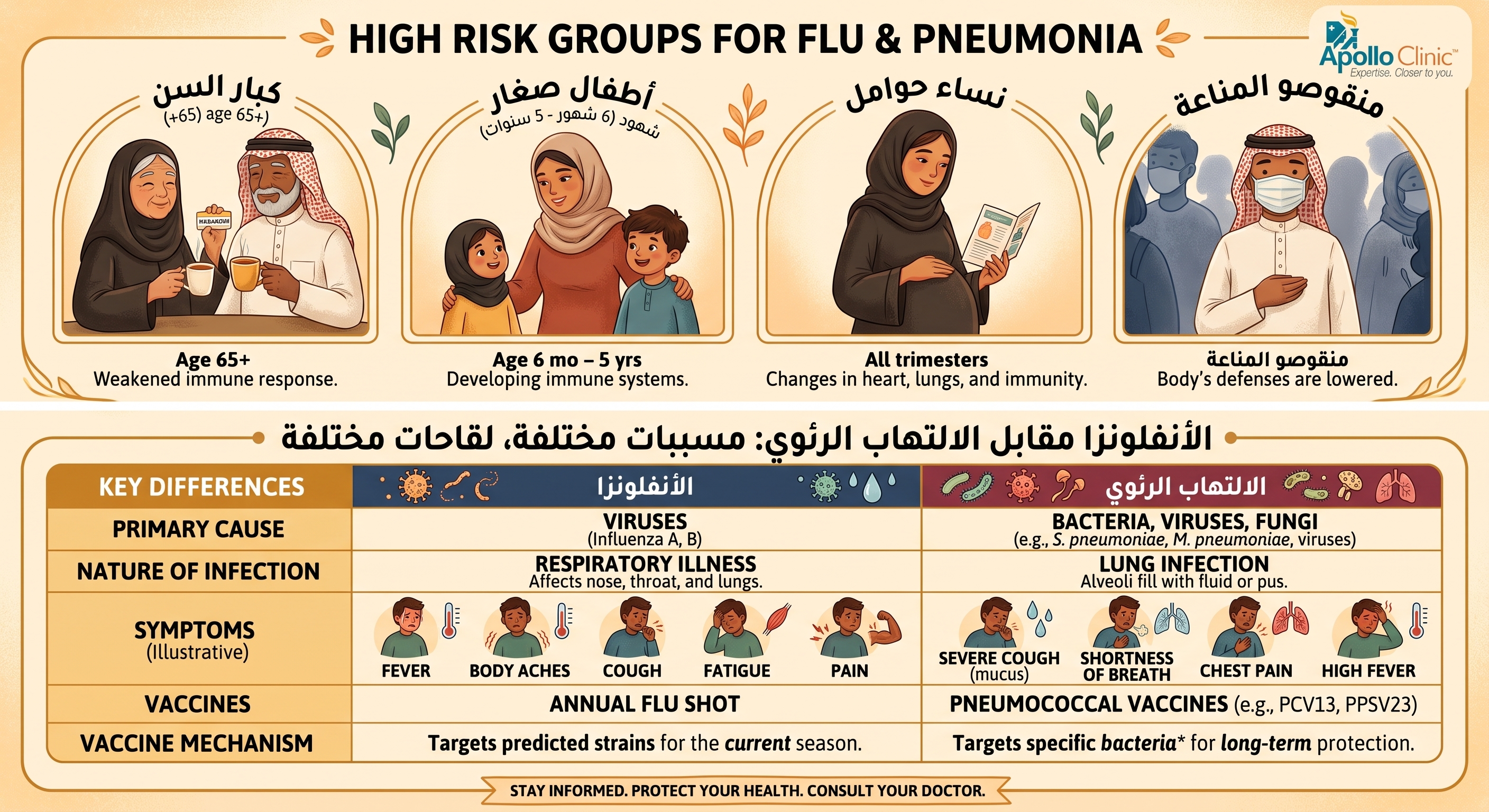
Not everyone faces the same level of risk from influenza and pneumonia. Some groups are significantly more likely to experience severe complications, hospitalization, or serious outcomes if they contract these infections.
The Ministry of Health emphasized the importance of vaccination particularly for the elderly, children, those with chronic diseases, pregnant women, people with weakened immune systems, and healthcare workers. arabtimesonline
To summarize the priority groups:
Elderly residents — Adults over 65 experience higher rates of hospitalization and complications from influenza.
Children — Young children, especially those under five, are at elevated risk. They also play a significant role in spreading infection in households and schools.
People with chronic illnesses — Those living with diabetes, heart disease, lung disease, kidney disease, or other chronic conditions face a higher chance of severe complications.
Pregnant women — Influenza during pregnancy can affect both the mother and the developing baby. Vaccination is generally recommended.
Immunocompromised individuals — Anyone whose immune system is weakened due to disease or treatment has reduced natural defenses against respiratory infections.
Healthcare workers — Those who work in clinics and hospitals are regularly exposed to infections and can inadvertently pass illness on to vulnerable patients.
What Happens If You Do Not Vaccinate
The influenza virus infects about one billion people annually around the world, with children under five and the elderly over 65 being the most vulnerable to the complications. This virus also causes the death of about half a million people annually worldwide. kuwaittimes
Pneumococcal bacteria, which causes several diseases including pneumonia, bacterial meningitis, bacterial blood poisoning, and otitis media, causes the death of about 40 cases annually in Kuwait alone. kuwaittimes
Vaccination does not guarantee complete immunity — the flu vaccine’s effectiveness can vary depending on the match between the vaccine formulation and the circulating viral strains each season — but it consistently reduces the risk of severe disease, complications, and hospitalization.
Are These Vaccines Available at Private Clinics?
While the Ministry of Health provides vaccines free of charge at government health centers, private medical clinics across Kuwait also offer influenza and pneumococcal vaccinations. For residents who prefer the convenience of a private clinic, shorter waiting times, or who wish to consult with a physician before vaccination, this is a practical option.
A medical consultation prior to vaccination is particularly advisable for:
People with known egg allergies (the manufacturing process of some flu vaccines involves eggs)
Individuals with a history of Guillain-Barré syndrome
Those who are currently unwell with a fever
Patients who are uncertain about which vaccines are appropriate for their age and health status
Influenza vs. Pneumonia: Two Different Vaccines
A common point of confusion is that influenza and bacterial pneumonia are caused by entirely different pathogens and require separate vaccines.
The influenza vaccine targets the influenza virus and is updated each year to reflect the strains most likely to circulate. It does not protect against other respiratory viruses such as the common cold.
The pneumococcal vaccine protects against Streptococcus pneumoniae, a bacterium responsible for bacterial pneumonia, ear infections, bloodstream infections, and bacterial meningitis. Unlike the flu vaccine, this vaccine does not need to be administered every year for most adults — though your physician can advise you on the appropriate schedule.
Both are commonly recommended together for high-risk individuals, as influenza can lower the body’s defenses and make a person more susceptible to secondary bacterial pneumonia.
Practical Steps for Kuwait Residents
Check whether you belong to a priority group. If you are elderly, pregnant, caring for young children, managing a chronic illness, or working in healthcare, vaccination is especially important this season.
Schedule your vaccine in September or early October. Do not wait until the winter surge begins. Earlier vaccination allows time for immunity to develop.
Consult a physician if you have any concerns. A brief medical consultation can confirm which vaccines are appropriate for your specific health profile.
Remind family members. Household transmission of influenza is common. Vaccinating the whole family provides a broader layer of protection for the most vulnerable members.
FAQ
Q: Is the flu vaccine available in Kuwait for free?
A: The Kuwait Ministry of Health provides influenza and pneumonia vaccines at no cost at government health centers, primary care clinics, and select hospitals. Private clinics may charge a fee but offer additional services such as physician consultations.
Q: Can I get the flu and pneumonia vaccines at the same appointment?
A: In most cases, yes. Both vaccines can typically be administered during the same visit. Your physician or clinic staff can advise you on the most appropriate approach based on your health status.
Q: Do expats in Kuwait qualify for the government vaccination campaign?
A: Yes. The Ministry of Health campaign is open to citizens and residents of Kuwait. Priority groups receive particular emphasis, but the campaign is broadly available to the public across Kuwait’s health zones.
Q: Does the flu vaccine work against all types of influenza?
A: The seasonal flu vaccine provides protection against the specific virus strains anticipated to be most prevalent each season. The formulation is reviewed and updated annually. It does not provide protection against unrelated respiratory viruses.
Q: I am healthy and under 40. Do I still need the vaccine?
A: While the risk of severe complications is lower for young healthy adults, vaccination still reduces the chance of infection, days lost to illness, and inadvertent transmission to vulnerable family members or colleagues. It is worth discussing with your physician.
Q: When during the year should I get the pneumococcal vaccine?
A: Unlike the flu vaccine, the pneumococcal vaccine is not necessarily annual for all adults. Some formulations are given once in a lifetime, while others require boosters. Your physician can advise based on your age, health history, and which vaccine type you have previously received.