
Every year, Arab Health Day serves as a moment of collective reflection across the region. This year, Kuwait’s Ministry of Health marked the occasion under the theme “Towards a Longer Life and Sustainable Quality of Life” — a call not just to live longer, but to live better. The message is timely: chronic non-communicable diseases (NCDs) now account for the majority of deaths in Kuwait and across the Gulf.
At Apollo Clinic Kuwait, we believe the most powerful prescription doesn’t always come from a pharmacy. Often, it comes from your kitchen.
The Chronic Disease Burden in the Gulf
Chronic diseases — including type 2 diabetes, hypertension, cardiovascular disease, and certain cancers — share a common thread: they develop over time, are closely linked to lifestyle, and are largely preventable. The World Health Organization consistently identifies poor diet as one of the leading modifiable risk factors for NCDs globally.
In Kuwait, the profile is particularly pressing. High rates of overweight and obesity, sedentary lifestyles, and diets heavy in processed foods and refined sugars create conditions where chronic disease flourishes. Arab Health Day is an opportunity to change that trajectory — one meal at a time.
What Does a Disease-Preventive Diet Actually Look Like?
The evidence base is clear: dietary patterns, not individual “superfoods,” are what matter most. Here’s what research consistently supports:
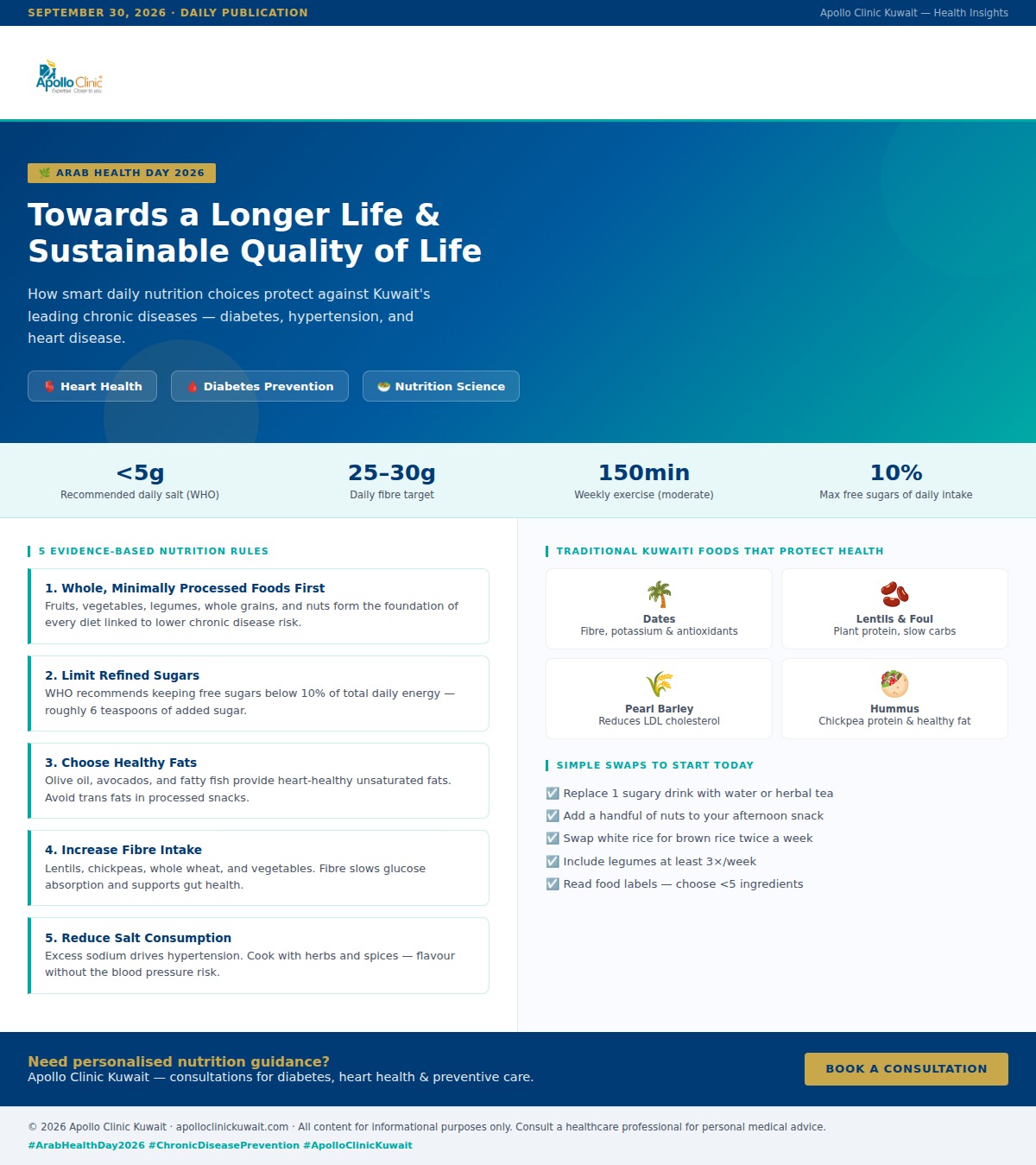
1. Prioritise Whole, Minimally Processed Foods
Fruits, vegetables, whole grains, legumes, nuts, and seeds form the foundation of every diet linked to lower chronic disease risk — from the Mediterranean diet to traditional Middle Eastern eating patterns. These foods provide fibre, antioxidants, and micronutrients that regulate inflammation and metabolic function.
2. Limit Refined Sugars and Ultra-Processed Foods
Sugar-sweetened beverages are among the most studied contributors to type 2 diabetes and obesity. The WHO recommends limiting free sugars to less than 10% of total energy intake — ideally below 5%. For a typical adult, that’s roughly six teaspoons of added sugar per day.
3. Choose Healthy Fats
Not all fats are equal. Olive oil, avocados, and fatty fish provide unsaturated fats that support cardiovascular health. Trans fats and excessive saturated fats — found in many processed snacks and fast foods — are associated with increased LDL cholesterol and heart disease risk.
4. Increase Fibre Intake
Most adults in the region consume far less fibre than recommended. Fibre slows glucose absorption (benefiting blood sugar control), supports gut health, and is linked to reduced colorectal cancer risk. Aim for at least 25–30 grams per day through lentils, chickpeas, whole wheat bread, and vegetables.
5. Moderate Salt Consumption
Excess dietary sodium is a direct driver of hypertension. The WHO recommends less than 5 grams of salt per day. Cooking at home with herbs and spices rather than salt is one of the simplest ways to reduce intake without sacrificing flavour.
Traditional Gulf Foods: Nutritional Powerhouses Worth Reclaiming
Arab Health Day is also a moment to rediscover the nutritional wisdom in traditional Gulf cuisine. Dates — a staple across Kuwaiti culture — are rich in fibre, potassium, and antioxidants. Legume-based dishes like harees and thareed provide plant protein and slow-releasing carbohydrates. Pearl barley, used in traditional soups, is among the most effective foods for reducing LDL cholesterol.
The challenge in modern Kuwait is that convenience culture has replaced many of these traditions with fast food and processed alternatives. Reconnecting with traditional eating patterns, adapted for modern life, is one of the most culturally resonant health strategies available.
🌴 Did you know? Dates, chickpeas, barley, and lentils — staples of traditional Kuwaiti and Gulf cooking — are nutritionally comparable to the “superfoods” celebrated in global health media. Your culinary heritage already contains powerful medicine.
Practical Steps to Start Today
You don’t need a dramatic dietary overhaul. Small, consistent changes compound over years into dramatically different health outcomes:
Replace one sugary drink per day with water or unsweetened herbal tea
Add a handful of nuts (walnuts, almonds) to your afternoon snack
Swap white rice for brown rice or bulgur twice a week
Include a legume-based dish (lentil soup, hummus, foul) at least three times per week
Read food labels and choose products with fewer than five ingredients where possible
When to Seek Professional Guidance
Nutrition is not one-size-fits-all. Individual factors — existing conditions, medications, family history, age, and activity level — all influence what an optimal diet looks like for you. If you have been diagnosed with diabetes, hypertension, or high cholesterol, a personalised dietary assessment can be transformative.
Apollo Clinic Kuwait offers consultations with experienced healthcare professionals who can assess your current health status, review relevant risk factors, and provide tailored nutritional guidance as part of a comprehensive health plan.
This Arab Health Day, the most meaningful commitment you can make is a simple one: to take your daily food choices seriously. Because what you eat today shapes the health you carry into tomorrow.
Ready to Take Control of Your Health?
Book a consultation at Apollo Clinic, Mahboula, Kuwait. Our team offers preventive health assessments, diabetes screening, heart health check-ups, and personalised nutritional guidance — all under one roof.
Frequently Asked Questions
Q: What is Arab Health Day and why does it matter?
Arab Health Day is an annual observance across Arab nations focused on raising health awareness. In 2026, Kuwait’s Ministry of Health marked it under the theme “Towards a Longer Life and Sustainable Quality of Life,” highlighting preventive health and lifestyle medicine.
Q: Which chronic diseases are most linked to poor diet?
Type 2 diabetes, hypertension, cardiovascular disease, obesity, and certain cancers are all strongly associated with poor dietary patterns according to WHO and global public health evidence.
Q: Is Kuwaiti/Gulf traditional food healthy?
Many traditional Gulf dishes — legume-based stews, barley soups, dates, and vegetable-rich preparations — are nutritionally excellent. The shift toward processed and fast food in modern diets is what has elevated chronic disease risk.
Q: How quickly can dietary changes affect health?
Some markers, such as blood sugar and blood pressure, can show improvement within weeks of sustained dietary changes. Long-term risk reduction for chronic disease occurs over months to years of consistent healthy eating.
Q: Should I see a doctor before changing my diet?
If you have an existing health condition or take regular medications, consulting a healthcare professional before making significant dietary changes is advisable. Apollo Clinic Kuwait can guide you through a tailored plan.
Disclaimer: This article is for informational purposes only and does not constitute medical advice. Please consult a qualified healthcare professional for personal medical guidance.